#39Schoolyards
2–6%of school grounds are left for anything other than the pitch.
The girls you want on your team are standing at the edge of the pitch.
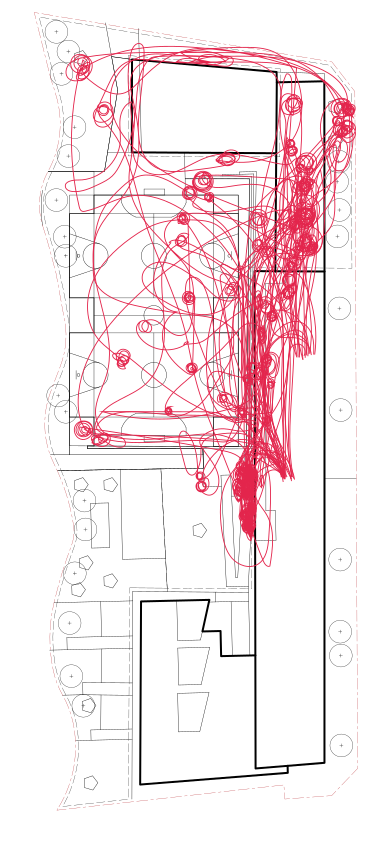
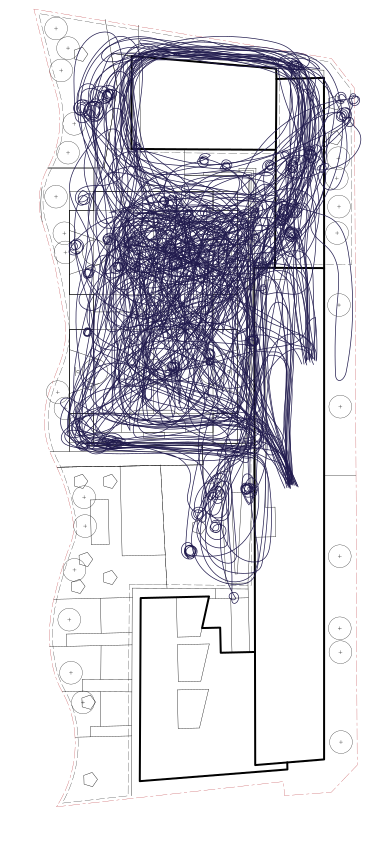
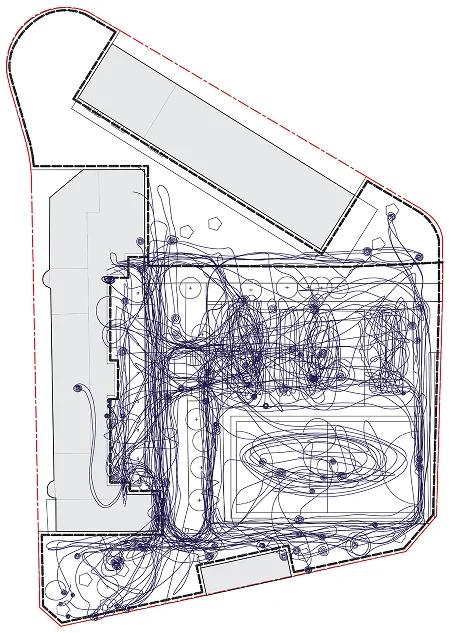
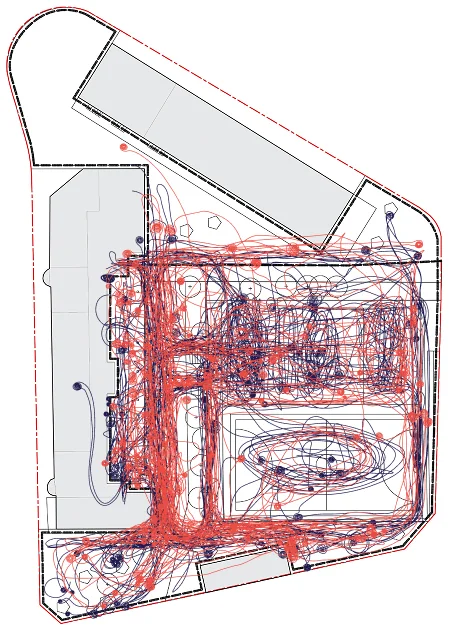
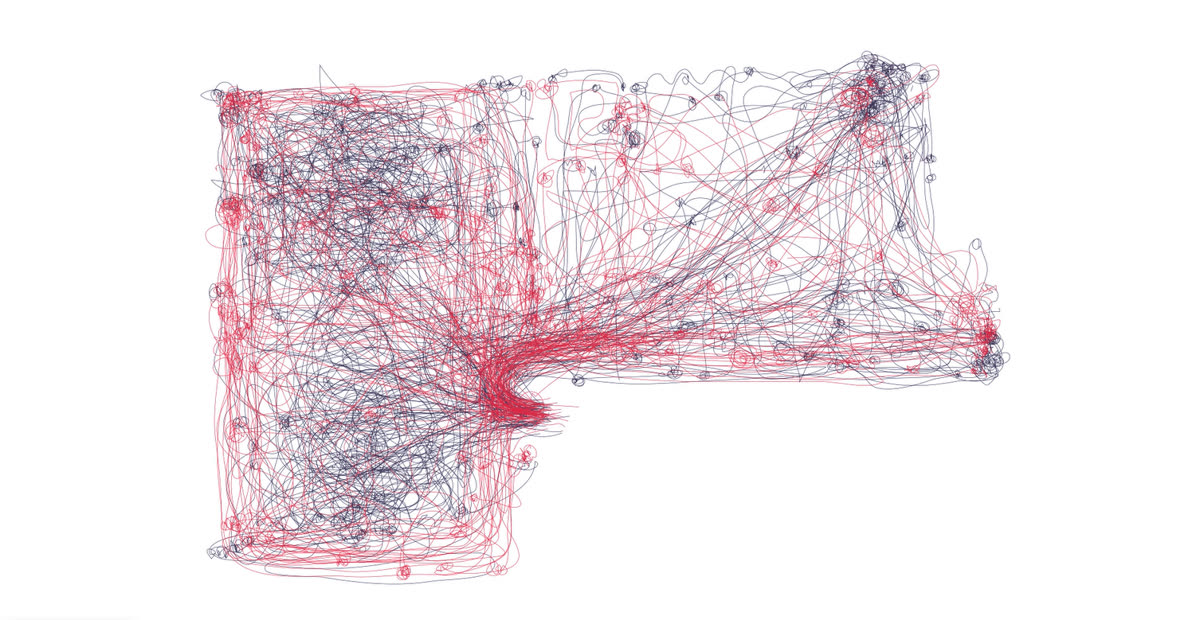
Every line is one child moving through recess. Blue fills the middle. Red traces the edges. We are architects and urban designers, and for years we have mapped how children move in schoolyards and parks. The pattern is the same everywhere: the space is designed for one game, and girls are designed out.
01What is footballcentrism?
Footballcentrism is a spatial bias. Schoolyards and parks are planned around a large, central, best-maintained football pitch. Competitive, team-based, traditionally male-coded play gets the most visible space. Everything else — sitting, talking, dancing, climbing, handstands — is squeezed into what is left over.
The pitch becomes territory. Confident boys hold it. Girls, and boys who don't play football, learn early where they don't belong — and carry that lesson into streets, squares and adult life.
How a typical schoolyard is divided
Girls do not question space. They adjust. They adapt.
Adaptation is not strength. It is erasure. — Architektoniczki, 2025
02What we saw
of school grounds are left for anything other than the pitch.
of football-pitch use is by boys. It is the most visible space in the school.
of girls' observed time is spent on the periphery, often in shaded or hidden corners.
Girls' routes are about 80% as long as boys'. Their movement is limited across the whole yard.
of girls' activities are seated or stationary. Boys' play is mostly active.
Boys claim 8.5% of the park's usable space. Girls get 1%, mostly benches. Dogs get 2%.
joined the boys' football in one month of observation — on just two occasions.
the park becomes a male domain. Girls are absent — held back by safety concerns, not by choice.
Findings from Architektoniczki field research. Full data and sources in the project guide.
03Mapped paths
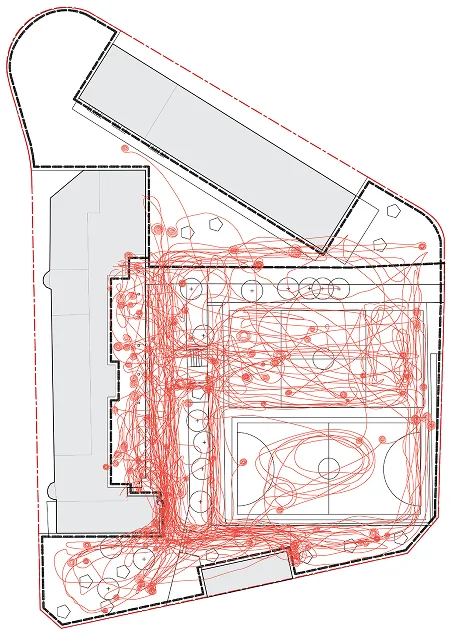
One big court block takes the whole open yard. Every route starts at the same door.
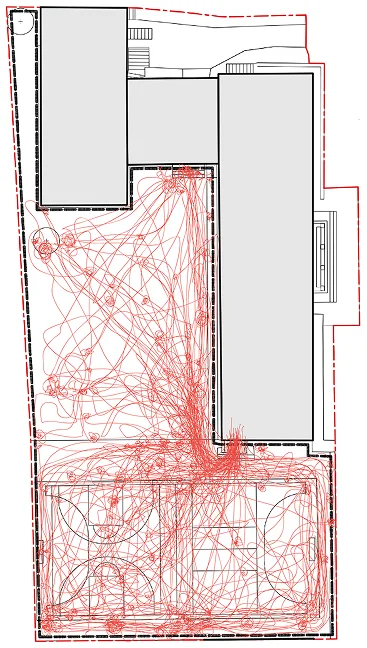
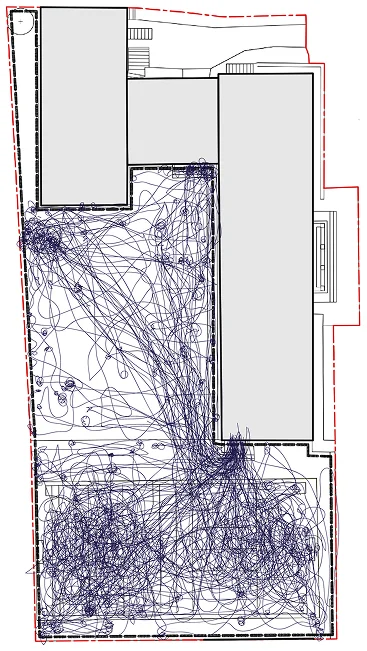
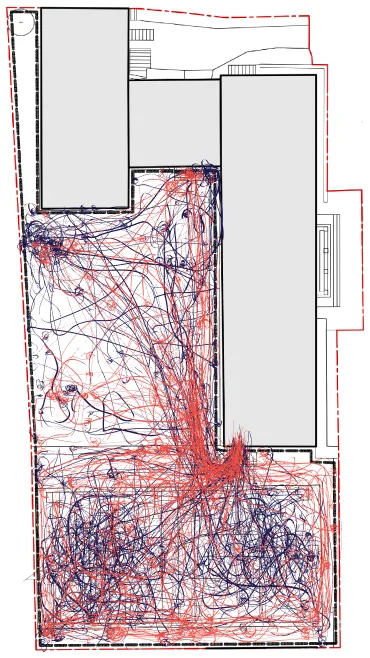
Boys spread across the open yard. Girls keep to a narrow strip along one side.
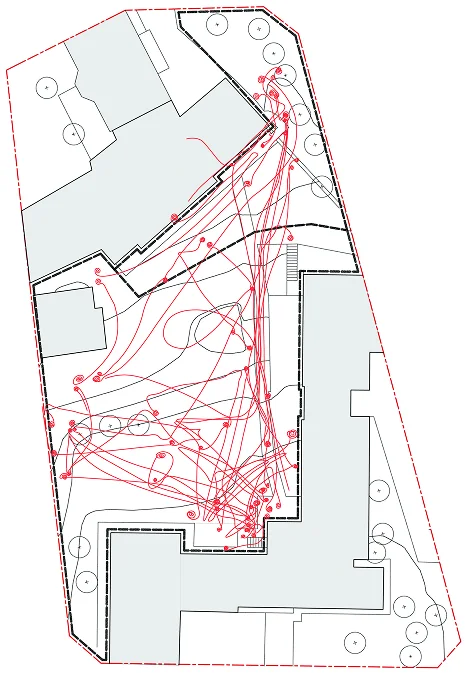
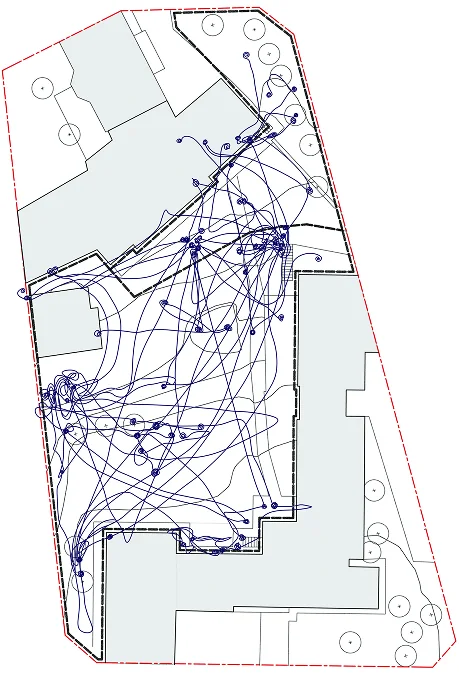
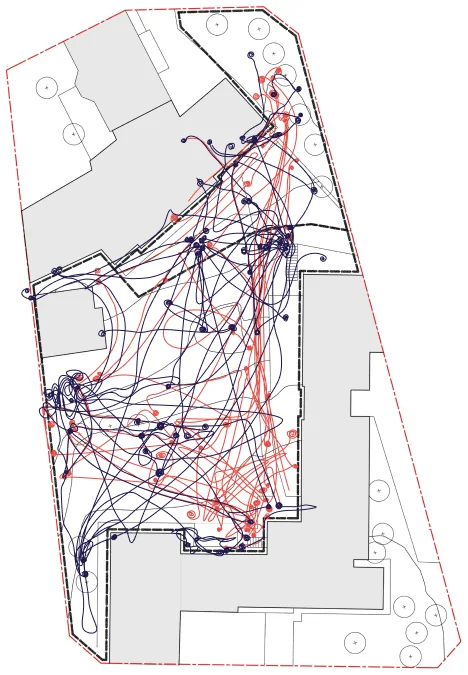
Blue fills the pitch. Red hugs the edge of the building.
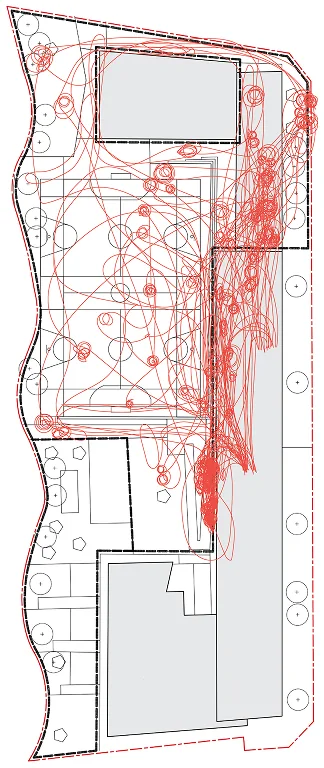
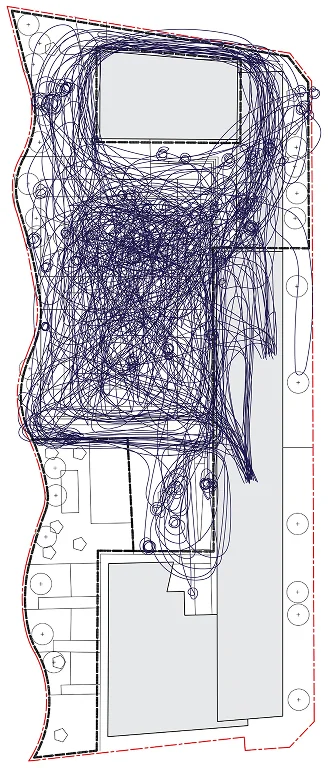
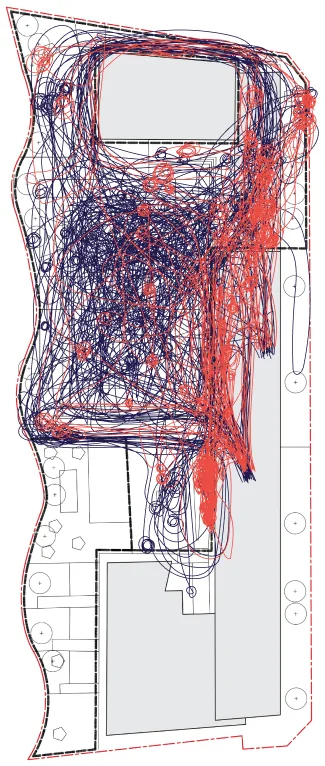
Blue circles the pitch. Red runs the corridor beside it, under the trees.
04Why we need you now
When a park swaps the pitch-and-playground layout for hammocks, swings and seating, girls come back. The ratio flips. But they still sit. The design changed where girls are — not whether they are active.
That is the gap our next phase will close: which physical changes to a schoolyard actually get girls running, climbing and playing — and keep them active past the age when they usually stop.
5 boys : 2 girls
1 boy : 3 girls
Extend the mapping to schoolyards in more countries, with the same method, so the evidence can't be dismissed as local.
Test specific design changes and measure what actually increases girls' physical activity — not just their presence.
Turn the results into design guidelines for schoolyards first, then parks and public space for all children.
Make
Her
Move
Grzesikowska & Jaskulska · Coming soon
05 The book
Years of fieldwork, maps and children's own voices in one book: how schoolyards and parks decide who gets to move, and what architects, schools and cities can do about it.
One email when the book is out. Nothing else.
06Partner with us
→For football clubs
This isn't research against football. It's research for more girls playing — including football. In a month of observation, only two girls joined a game. Help us find out what would change that.
07Watch
Part I
Part II
Part III
08Who we are
Urban designer and spatial equity specialist. Long-standing research into gender-equitable public space.
Architect. Co-author of the term footballcentrism (Jaskulska & Grzesikowska, 2022).
Previous phase co-funded by the Erasmus+ programme of the European Union.